Innovate Rural Get Updates
Past event · May 2026

Innovate Rural 2026

The first year under the Innovate Rural name, with three streams (Technology, Academia and Arts) and new co-hosts: the Institute for Research on Public Policy, the Saskatchewan Economic Development Alliance and Southeast College, alongside founding partner Southeast Tech Hub.

May 25–26, 2026Southeast College, Estevan Campus35 presenters
Highlights

Keynotes and evening events

Zita Cobb

Evening presentation by the founder and CEO of Shorefast, on Fogo Island and place-based economies.

Read bio →

Theo Argitis

Keynote: Rural Canada and First Nations, the backbone of Canada’s economic sovereignty.

Read bio →

Rachel Samson

Plenary: Community Transformations in a Changing World, from IRPP’s Vice President of Research.

Read bio →

The evening closed with music by Eliza Doyle. Download the 2026 program (PDF) →

Sessions

Breakout sessions

Understanding Barriers and Opportunities in Trade Diversification

Read more ↓

The IRPP will lead a discussion on trade diversification as part of its new Global Ambition, Local Prosperity project. The goal will be to understand barriers that rural businesses and entrepreneurs face in exporting to non-U.S. markets or developing local supply chain alternatives to international imports.

Presenter: Rachel Samson, Sarah McInnis  .

Building a Rural Tech Hub: From Idea to Impact

Read more ↓

In this practical, no-fluff session, Gordon More shares how to design, launch, and scale a rural tech hub that actually works in a small community.

Drawing from his experience building a rural innovation ecosystem focused on energy, entrepreneurship, and applied research, Gordon walks through the real steps—governance, partnerships, funding strategy, stakeholder alignment, and political navigation. This is not theory. It’s what happens when you try to build innovation capacity outside of major urban centers.

Participants will learn:

  • How to define a clear mission that aligns with local industry (energy, agriculture, mining, manufacturing, etc.)
  • How to structure governance and avoid turf wars
  • How to secure anchor partners (municipalities, Indigenous governments, utilities, colleges, industry)
  • Why project-based funding is both a blessing and a trap
  • How to attract startups and external companies to rural regions
  • How to position your hub within provincial and federal policy frameworks
  • How to build credibility before you have major wins
  • The difference between an incubator, an innovation centre, and a community economic development office
This session is designed for economic development officers, municipal leaders, college administrators, entrepreneurs, and community champions who are tired of waiting for outside investment and want to build their own innovation engine.

If your community wants to compete in energy transition, critical minerals, advanced agriculture, AI, or clean tech—this is your blueprint.

Beading and Tech

Read more ↓

Jill Ruep is a Métis entrepreneur from Saskatchewan who is redefining how traditional Indigenous art can thrive in the digital age. As the founder of Ma Fii Lii Rasaad —Michif for My Daughter’s Beads —she is developing one of North America’s first Indigenous-led digital platforms dedicated to beadwork design and learning.

In this presentation, Jill shares the story behind her company and how she is blending traditional Indigenous beading with modern technology. Her work brings together cultural knowledge, storytelling, and digital design tools to help users create beadwork patterns while learning the cultural meaning behind them. The platform aims to support youth, educators, and communities who want to reconnect with beadwork traditions but may not have direct access to elders or teachers.

Jill will discuss how her idea evolved from community workshops and beading kits into a growing tech-enabled venture supported by students and developers. She will also explore the bigger vision behind the platform: preserving Indigenous knowledge, empowering creativity, and demonstrating how technology can strengthen—not replace—traditional cultural practices.

This session is a powerful example of Indigenous innovation, showing how culture, entrepreneurship, and digital technology can come together to create new opportunities for learning, creativity, and cultural resilience.

Cultural Asset Mapping

Read more ↓

Cultural asset mapping is a powerful tool for understanding the cultural strengths, resources, and identities that already exist within a community. It helps communities focus on the intangible and tangible assets they have while celebrating their uniqueness. This also aids in community building, bringing a broad range of community members to provide input and shape future steps.

In this workshop, you will learn what cultural asset mapping is, regional and national examples, and the intrinsic steps you can take back to your communities to build stronger networks, build collaborative partnerships, and design community-led initiatives. This session will include an hour of lecture and an hour of group work and exchange.

Presented by: Amber Andersen and Joni Hagen

Beyond the Craftmanship: Online Ordering and AI marketing in an Artisan Bakery

Read more ↓

Sourdough Bakeries rely on artisanal craftmanship and traditional techniques in their production. Social media influenced the image of slow bread baking profoundly by creating earth toned, slow paced, minimalistic reels.

The missing piece to success even in artisanal bakeries is e-commerce in the form of online marketing and online shops. This presentation will take the audience through a short genesis of JUST BREAD, a Sourdough bakery from Oxbow with a multi-location set-up and their use of Square for an integrated POS and online Shop management.

A dive into the use of AI for online marketing will position Craftmanship in the field of authenticity and sales strategy.

Presented by: Edith Berntson

The Rural Art Studio as an Innovation Lab Scaling Creative Practice Through Technology and IP

Read more ↓

This session explores how a small rural art studio can operate as an innovation lab by using technology, intellectual property, and digital platforms to build a scalable creative ecosystem. Discover how original artwork becomes the foundation of a self-reinforcing content-and-commerce loop through YouTube tutorials, social media discovery, a studio website, downloadable art, Amazon-published, and third-party fulfillment partners. Together, these tools transform creative work into multiple forms of intellectual property that reach global audiences, demonstrating how rural artists can move beyond one-to-one production toward scalable creative enterprises that strengthen the rural creative economy.

Presenter: Jackie Wall

Drayton Valley’s TAB Program: Building Rural Talent Pipelines

Read more ↓

Rural communities are losing talent and facing labour shortages. Drayton Valley’s TAB (Training and Advancement Bridge) Program tackles this head-on by connecting education, training, and local jobs into one system.

This session breaks down how TAB aligns training with real industry needs, helping students and job seekers move quickly into the workforce while supporting local employers.

Key takeaways:

  •  Connecting education directly to jobs
  •  Creating local career pathways to retain talent
  •  Coordinating partnerships across industry, government, and post-secondary
  •  Offering a practical model other rural communities can replicate
A straightforward case study in rural innovation—focused on people, alignment, and getting results.

Presented by: Maria Mayan

Remote Art and Marketing

Read more ↓

Marsha Schuld will be talking about how living and working in an isolated area affects her practice. Diverse ideas such as marketing, access to materials, inspiration, isolation and increased production costs will be discussed. What does an artist living in an isolated area need to consider in order to have a professional practice? How can isolation be both a positive influence and a challenge? And what can rural communities do to support entrepreneurs in their community and how do artists benefit the community in return?

Supporting Communities and Workers Through Change

Read more ↓

When industries transform, rural communities need foresight. In this session, the Institute for Research on Public Policy (IRPP) will share key insights from the Community Transformations Project, showcasing how data-driven tools can help communities proactively navigate economic shifts. Moving beyond traditional models, we will explore how local leaders can leverage interactive platforms and community-level data to anticipate vulnerabilities, whether from trade disruptions, the net-zero transition, automation, or other drivers of change. The discussion will highlight practical ways municipalities can apply this research - such as using skills-similarity tracking to evaluate workforce needs- to attract the right industries and design targeted support for workers.

Lights, Camera, Saskatchewan!

Read more ↓

Learn how the film industry is a powerful economic driver for Saskatchewan. Join Creative Saskatchewan and ScreenSask for an engaging session that explores the film industry's structure and how the new incentive program provides revenue-generating opportunities for Saskatchewan's rural and urban communities.

Speakers

Creative Saskatchewan is the economic development agency for Saskatchewan's creative industries and the official film commission for the province. The agency's investments propel creative entrepreneurs as they create, perform, innovate, and export in their pursuit of commercial success.

ScreenSask, formerly known as the Saskatchewan Media Production Industry Association (SMPIA) is a provincial, member-based non-profit organization that is governed by a volunteer board of directors. Established in 1986, ScreenSask represents all personnel related to the making and exhibiting of media productions from beginners to veteran professionals. ScreenSask’s job is to be a catalyst for change, to facilitate interaction between people working in these media, and to help to create an environment that provides opportunities for the production, promotion and appreciation of media production in Saskatchewan.


From Wood Stoves to WiFi: How Technology Transformed My Kitchen, My Business, and My Voice.

Read more ↓

Laurie Wall’s journey isn’t just about food—it’s about evolution. From cooking on wood stoves to building a digitally connected culinary brand, Laurie has redefined what it means to be a rural entrepreneur in a modern world.

In this session, Laurie shares how she leveraged technology to scale her business, amplify her voice, and create deeper connections with her audience—without losing the authenticity that made her stand out in the first place. From online presence and storytelling to experience design and customer engagement, she breaks down what actually works (and what doesn’t) when you’re building something real outside of urban centres.

Grounded in her work at The Old Stone Inn and her experience growing and exiting a successful catering company, Laurie offers a candid look at the intersection of tradition and innovation. This is not about chasing trends—it’s about using the right tools to stay relevant, build community, and create something that lasts.

If you’re building, creating, or trying to find your voice in a noisy world—this one hits.

Ranchers vs. Regulators Fixing Canada’s Broken AgTech Innovation System

Read more ↓

What happens when the people closest to a problem are the furthest from the decisions meant to solve it?

In 2020, four Alberta ranching families launched Flokk Systems to tackle a critical gap in Canada’s livestock traceability system—one that regulators knew existed, but rural producers were expected to fix without the right tools. What followed was six years of effort, significant personal investment, and a direct столкновение with a system that consistently funds research over results, urban actors over rural builders, and process over productivity.

Despite developing and proving a working solution, Flokk encountered systemic barriers: limited access to funding, misaligned government priorities, and millions in public dollars flowing to initiatives unlikely to deliver real-world impact on ranches.

In this session, Mark Olson, Founder and President of Flokk Systems, breaks down what’s not working in Canada’s AgTech innovation ecosystem—and why. Drawing from lived experience, he will challenge the top-down approach to innovation and make the case for a fundamental shift: putting rural producers at the center of defining problems and delivering solutions.

This is a candid look at the urban–rural divide in innovation—and a call to rebuild a system that actually delivers results where it matters most: on the ground, on farms, and on ranches.

Presented by: Mark Olson

Misinformation, Polarization, and Anti-Social Media

Read more ↓

Jaigris Hodson is the Canada Research Chair in Digital Misinformation, Polarization, and Anti-Social Media. Their research takes an interdisciplinary approach to understanding how the technologies we use to communicate heighten our vulnerabilities to misinformation, polarization, and other on- and offline anti-social behaviors.

Hodson uses novel, field-building approaches to map the relationships between polarization, misinformation, and online harassment, and to facilitate democratic communication.

AI-Powered Grain Grading: Real-Time Quality Insights from Farm to Destination

Read more ↓

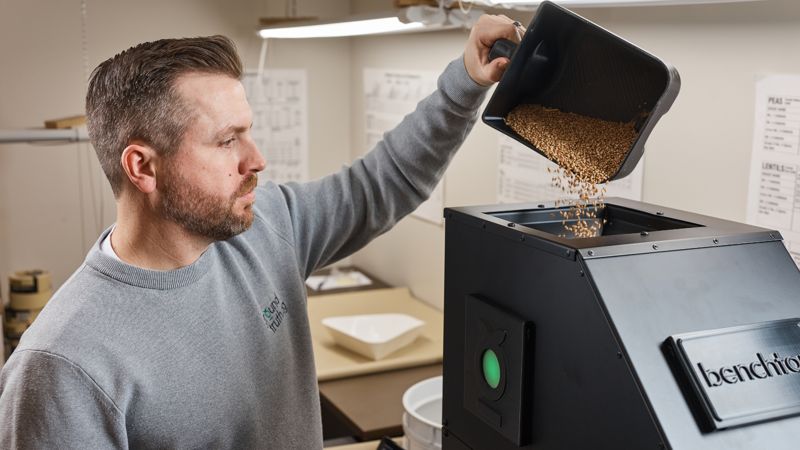
From farm to facility, to destination, our advanced proprietary Artificial Intelligence delivers consistent, real-time automated grain grading and quality insights at each stage of the supply chain. Eliminate subjectivity to drive productivity and profitability with ease.

Presented by:  Kyle Folk

Rural Canada & First Nations: The Backbone of Canada’s Economic Sovereignty

Read more ↓

Canada’s economic future will not be built in its largest cities—it will be built in rural regions and in partnership with First Nations.

This session explores how rural Canada already drives a disproportionate share of GDP, exports, and resource production, and why that role is becoming even more critical. It also highlights a major shift: First Nations are increasingly acting as owners and equity partners in major projects across energy, infrastructure, and natural resources.

We will examine the role rural and Indigenous communities play in energy, food systems, and critical minerals, the barriers still holding these regions back, and what needs to change to ensure long-term economic resilience.

The message is clear: Canada’s competitiveness depends on getting this right.

Presented by Theo Argitis

Social Enterprise as a Vehicle for Rural Innovation

Read more ↓

Rural communities are innovating every day—not always through technology, but through new ways of owning assets, delivering services, and building resilient local economies. This session explores social enterprise as a practical, place‑based vehicle for rural innovation, particularly in communities facing market gaps, service loss, workforce constraints, and limited access to capital.

Presented by: Verona Thibault

From Classroom to Community: Real-World Innovation in Rural SK

Read more ↓

This session showcases the Solar Data Dashboard project as a hands-on research environment, where students in the Computer Science Training through Projects program built a real-time solar data system for public display.

Through a partnership with Turning Sun Solar, this initiative demonstrates how innovative collaboration can develop both talent and infrastructure. Students will present on their learning outcomes, offering a rare, behind-the-scenes look at applied learning in action.

Presenters Tania Andrist and Ryan Gustafson will explore how rural institutions can build capacity and deliver innovation locally, rather than exporting it elsewhere.

From Trails to Data Infrastructure: Building a Digital Backbone for Rural Recreation Economies

Read more ↓

In this session, Dr. Farhad Moghimehfar and Sarah Sinclair unpacks the innovation behind the Mountain Biking BC Insights Platform—a purpose-built digital system that transforms fragmented recreation data into a coordinated, decision-ready intelligence layer for rural communities.

This isn’t just a website. It’s an integrated data infrastructure that combines rider surveys, GPS/mobile tracking, and regional analytics into a unified platform—allowing communities to move from guesswork to real-time, evidence-based decision making.

What makes this platform different is its ability to:

Aggregate multi-source data streams into a single, accessible interface Translate complex datasets into usable insights for non-technical decision-makers Create a shared intelligence system across communities, rather than isolated data silos Support continuous learning and iteration, not one-time reports

Dr. Moghimehfar will break down how this model represents a shift from traditional tourism research to live, adaptive systems—where data is continuously collected, analyzed, and fed back into planning and investment decisions.

For rural regions, this is a glimpse of what modern innovation looks like: not just new ideas, but new systems that change how decisions get made

Rural Innovation from Oil to Wind

Read more ↓

This presentation by Alan Nixon traces the story of Estevan as a community built on energy—and continually reshaped by innovation.

Starting with the early development of the region’s oil industry, Nixon explores how resource extraction, alongside coal mining and power generation, laid the economic and cultural foundation of the city. Estevan’s growth was never just about energy production—it was about problem-solving, adaptation, and building systems that worked in a demanding rural environment.

From there, the presentation shifts to the present and future, highlighting how that same mindset is driving new forms of energy innovation. Nixon introduces his patented bladeless wind turbine, a next-generation approach to wind power that moves away from traditional rotating blades and instead harnesses wind through oscillation-based design—offering potential advantages in safety, maintenance, and deployment.

This talk connects past to future in a way that’s real: Estevan didn’t just happen—it was engineered over decades through energy innovation. And if Nixon is right, the next chapter won’t be about leaving that legacy behind, but evolving it.

Investing in Resilience

Read more ↓

Innovation requires a strong foundation. For rural municipalities, treating community wellbeing as an empirical, investable asset is becoming a crucial tool for economic development. Moderated by the IRPP, this panel brings together researchers and local elected officials -including Yorkton City Councillor and researcher Dr. Stephanie Ortynsky - to discuss the realities of integrating "wellbeing frameworks" into city planning. Discover how municipal leaders are moving beyond traditional budgets to measure and fund quality of life, and how these social investments can help create the conditions needed to drive regional economic growth and attract new industries.

From Data to Development: Mapping Rural Opportunity

Read more ↓

Rural communities don’t lack opportunity—they lack visibility. In this session, the Rural Manitoba Economic Development Corporation (RMED) will show how their standardized community inventory system is changing that.

By mapping infrastructure, workforce, economic assets, and investment readiness, RMED has turned fragmented communities into clear, investment-ready opportunities.

This approach:

Helps communities identify strengths and gaps Makes rural regions easier for investors to understand Speeds up economic development decisions

This isn’t theory—it’s a practical, data-driven model for communities serious about attracting investment and building stronger regional economies.

Presented by Margot Cathcart

Presenters

35 presenters

Select a presenter to read their bio.

Minister Carr

Minister Carr

Lori Carr was elected MLA for Estevan in the 2016 and 2020 provincial elections, and re-elected as MLA for Estevan-Big Muddy in 2024.

Living in Estevan with her partner Bart, Lori spent 20 years working as a licensed assistant in a financial planning office. She is very active in the community as a board member for the Air Cadet League, Sun Country Health Region and Ducks Unlimited. Lori also spent 10 years serving on Estevan City Council.

Lori currently serves as the Minister of Mental Health and Addictions, Seniors and Rural and Remote Health.

She has served as Minister of Highways and Government House Leader, Minister of Government Relations, Minister of Social Services, Minister responsible for First Nations, Métis and Northern Affairs, Minister responsible for the Provincial Capital Commission, Minister of SaskBuilds and Procurement, and Minister responsible for the Public Service Commission, the Saskatchewan Liquor and Gaming Authority, and the Global Transportation Hub.

Prior to this, Lori was a member of the government’s leadership team as Deputy Whip and had served as a Legislative Secretary to both the Minister of Finance and the Minister responsible for SaskPower.

Lori has raised three children and is a very proud grandmother.

Minister Carr will be welcoming you to our conference.

More details: https://www.saskatchewan.ca/government/government-structure/cabinet/honourable-lori-carr


Rachel Samson

Rachel Samson

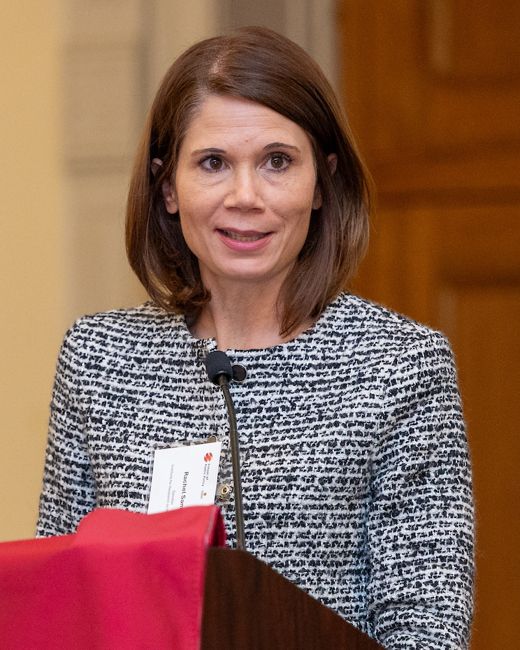
Rachel Samson is Vice President of Research at the Institute for Research on Public Policy (IRPP), an independent, national, non-profit organization that generates research and insight to improve public policy in ways that better the lives of Canadians. She leads a team analyzing issues including affordability, skills and training, community transformation, trade diversification, and industrial policy. Previously, she was Clean Growth Research Director at the Canadian Climate Institute and spent 15 years as an economist and executive in the federal government, along with five years as an independent consultant. Rachel holds a master’s degree in economics from Queen’s University.

Linkedin profile: https://www.linkedin.com/in/rachel-samson-67839446/

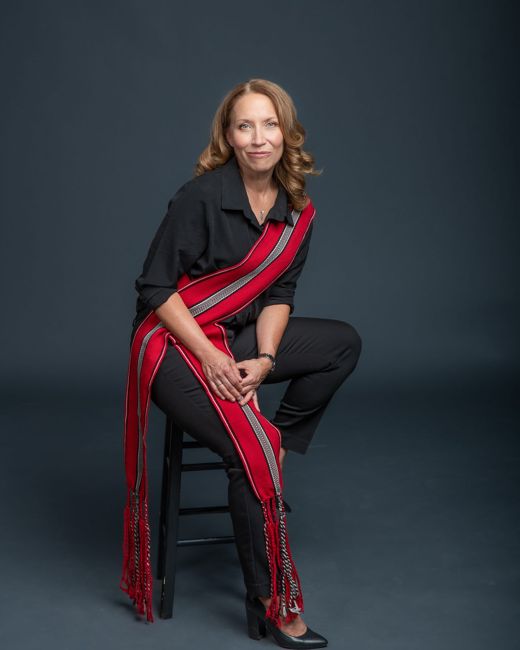
Jill Ruep

Jill Ruep

Jill Ruep is the founder and creator of Ma Fii Lii Rasaad (“My Daughter’s Beads” in Michif), an Indigenous‑led beading app and creative business based in Saskatchewan. She is a registered Métis citizen of Saskatchewan and a passionate advocate for preserving Indigenous teachings, storytelling, and cultural creativity through both traditional beadwork and modern technology.

Jill is set to be the first Indigenous person in North America to develop a beading app specializing in Indigenous content. Through Ma Fii Lii Rasaad, she bridges ancestral knowledge with digital innovation, empowering Indigenous artists, learners, and communities to design custom beading patterns while honouring the cultural significance behind each piece.

Jill also specializes in producing beading kits for bulk orders, which are widely used as giveaways at cultural events, conferences, and gatherings, as well as for team‑building, community connection, and educational experiences. These kits are designed to be accessible, meaningful, and rooted in Indigenous teachings, making them a powerful hands‑on way for participants to engage with culture and creativity.

She has facilitated beading workshops across Saskatchewan, collaborated with post‑secondary institutions, and partnered with computer science students to bring her vision to life. Her work has been showcased at community events, powwows, and cultural gatherings, with her kits and workshops reaching learners of all ages.

Alongside her entrepreneurial work, Jill is a Student Advisor and an emerging leader in Indigenous innovation. Her presentations focus on Indigenous‑led entrepreneurship, cultural preservation, and how technology can be used respectfully to strengthen, rather than replace, traditional knowledge.

Linkedin Profile: https://www.linkedin.com/in/jill-ruep-910963257/

My Daughters Beads: https://www.linkedin.com/company/mydaughtersbeads/

Ricardo Chejfec

Ricardo Chejfec

Ricardo Chejfec is a research director at the IRPP, leading the Empowering Canada’s Workforce program. He also helps lead the Community Transformations Project, aimed at supporting workers and communities through the global energy transition and changing trade landscape. He helped support research examining the role of industrial policy in Canada’s next economic transformation and was part of the secretariat of the Affordability Action Council. As the former Lead Data Analyst, Ricardo spearheaded research and analysis for multiple IRPP publications, including Building a Package of Compromise Solutions for EI Reform  and others in a series on Employment Insurance, as well as several policy briefs related to housing, transportation and food as part of the work of the Affordability Action Council. He advises the research team on artificial intelligence, technology adoption, data analysis and visualization. He previously worked as a research associate and business analyst and holds a Bachelor of Arts and Science in cognitive science and a Master of Public Policy from McGill University.

LinkedIn: https://www.linkedin.com/in/ricardo-chejfec/


Jackie Wall

Jackie Wall

Jackie Wall is a rural artist, creative entrepreneur, and community business leader based in Saskatchewan. Through Jackie Wall Studio, she creates original artwork, publishes colouring books, produces educational YouTube content, and develops digital and physical products that reach audiences globally. Jackie describes herself as an “Art”repreneur, blending creative practice with business strategy to build a scalable creative ecosystem powered by technology, intellectual property, and digital distribution.

In addition to her work as an artist, Jackie has been deeply involved in community and economic development. In 2022, she was honoured with a Queen Elizabeth II Platinum Jubilee Medal for her contributions to economic development and was named the Canadian Chamber of Commerce Executive Director of the Year for a chamber with fewer than 500 members. She holds a Bachelor of Commerce degree in Marketing and General Business, and brings her business background into her creative practice—demonstrating how rural art studios can operate as innovative, globally connected enterprises while remaining rooted in their communities.

Website: https:https://jackiewallstudio.com/

Maria Mayan

Maria Mayan

Maria Mayan is a Professor in the School of Public Health and an Associate Director of the Community University Partnership at the University of Alberta. As a community-based researcher, she has worked alongside stakeholders in Drayton Valley since 2019. Their collective work began by examining the outcomes of the Tuition Support Bursary (TAB) for TAB recipients and has now expanded to include youth training and employment, and a community-directed affordable housing project.

LinkedIn: https://www.linkedin.com/in/maria-mayan-4ba85132/

Erin Dean

Erin Dean

Erin is the CEO for Creative Saskatchewan. She is responsible for the overall operation of the organization, by providing strategic leadership and working closely with the provincial government, industry stakeholders, the Board of Directors, and the senior management team. Erin was Creative Saskatchewan’s first employee, as the Director of Programs, and has been heavily involved in the creation of programming right from the start. Previously, Erin was a Program Officer at the Saskatchewan Film Commission and has experience working in Business Affairs for several independent production companies.

Erin obtained her BFA in Film and Video Production and BA in English at the University of Regina. Erin also holds a Certificate in Entertainment Law from the Osgoode Hall Law School. In her spare time, Erin enjoys spending time with her family, especially baking with her daughter, watching the silver screen, and game nights with friends.

“At Creative Saskatchewan, we accelerate opportunities for Saskatchewan’s creative industries – we make Saskatchewan a great place to live and work.”

LinkedIn Profile: https://www.linkedin.com/in/erin-dean-518a75264/

Marsha Schuld

Marsha Schuld

Marsha Schuld is a multi-media artist who works out of her studio Near Rush Lake, Saskatchewan. Living rural is at the heart of her professional art practice. The media in which she works include but aren’t limited to: bronze sculpture, painting, drawing, stained glass, printmaking and intricate hand embroidery. While the medium changes, her work has always examined prairie life in one way or another, looking closely at the people, the flora and fauna or the landscape as a whole. Schuld is particularly interested in engaging “outsiders” in the prairie experience and encouraging viewers to look at this region critically and intimately, bridging urban and rural, foreign and local. Schuld also teaches adult and youth art courses in various media.

Website: https://www.willockandsaxgallery.com/sculptors/marsha-schuld

Edith Berntson

Edith Berntson

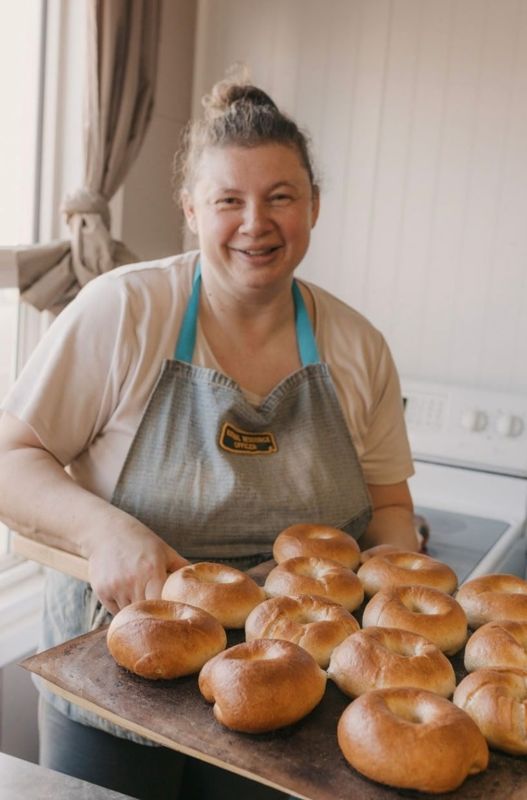
Edith Berntson is an artisan sourdough baker and entrepreneur behind JUST BREAD, a growing bakery brand originating in Oxbow, Saskatchewan. Rooted in traditional craftsmanship, Edith has built a multi-location operation that blends time-honoured baking techniques with modern business strategy.

Her work challenges the idea that artisanal food businesses must remain small or analog to stay authentic. By integrating digital tools such as Square for point-of-sale and online shop management, she has scaled operations while maintaining product integrity.

Edith is also exploring how AI-driven marketing can support small, craft-based businesses—bridging authenticity with visibility and sales. Her approach positions artisanal baking not just as a cultural practice, but as a viable, modern business model in an increasingly digital economy.

Edith's website can be found here: https://www.justbread.ca/

Robert Hardy

Robert Hardy

Robert Hardy is the Executive Director of ScreenSask, an association of over 250 creatives, producers, crew & stakeholders in Saskatchewan’s film and television industry. In this role Robert advocates for this dynamic and growing industry which adds tens of millions of dollars to the province’s economy every year. Robert has been working in Canadian television production for over 25 years as an executive, writer, producer & director focusing on documentary, lifestyle & scripted television. Among his recent credits are Pamela’s Cooking With Love (StackTV/flavour), Pamela’s Garden of Eden (HGTV/Hulu), Big Timber (History/Netflix) and Extracted (Fox/Crave). Robert helped create one of the world’s first web series in 1997 and has built an extensive network within the media industry since then. He has served as President, Canada for Fireworks Media Group, Senior Vice President Development at Entertainment One, VP Development at Paperny Entertainment, network executive with Bell Media and Senior Communications Officer with CBC-Radio Canada. Before that he was a fundraiser, communications director and advertising writer & director.

Laurie Wall

Laurie Wall

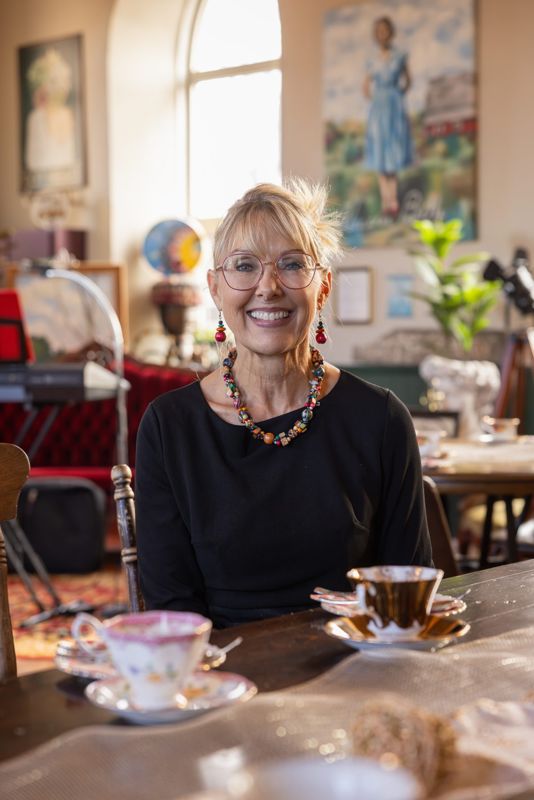
Laurie Wall is an award-winning chef, entrepreneur, and self-proclaimed celebrationist based in Estevan, Saskatchewan. A farm-to-table visionary with a sharp instinct for what people crave—both on the plate and in life—she is the creative mind behind The Old Stone Inn, a reimagined historic church turned boutique bed & breakfast and culinary experience hub. After building and selling a successful catering company, Laurie continues to push boundaries through immersive dining, community-driven events, and bold storytelling. Known for her intuitive cooking style, magnetic presence, and deep belief in connection, Laurie doesn’t just feed people—she creates experiences that linger long after the last bite.

Website: https://www.oldstoneinn.ca/

Remi Dufour

Remi Dufour

Remi is the Director of Film Finance and Economic Reporting for Creative Saskatchewan. He is responsible for leading the Film Department by supporting business attraction initiatives, including administering film production and development incentives, and reporting on metrics and outcomes. Remi also manages locations package delivery and location scout planning. Remi has a strong background with multinational accounting firms such as KPMG and Deloitte, as well as the Saskatchewan Ministry of Finance.

Remi holds a Bachelor of Business Administration, Certificate in Economics, Certificate in Entertainment Law, and is a Chartered Professional Accountant. In his spare time, Remi is active in recreational sports, and enjoys camping, hiking, fishing, and cycling with his wife and friends.

“Creative industries are essential to Saskatchewan’s economic success, and our agency creates a mechanism for which creative entrepreneurs can achieve their business goals. Our funding drives job creation, economic growth and external investment into our province while allowing local talent market their skills and works.”

LinkedIn: https://www.linkedin.com/in/remi-dufour-cpa/

Joni Hagen

Joni Hagen

Joni Hagen is the Executive Director of the South East Sport, Culture & Recreation District and brings 25 years of experience in the non‑profit and community development sector. For the past 15 years, she has led and supported sport, culture, and recreation initiatives across Southeast Saskatchewan, working directly with communities, volunteers, and local organizations to strengthen programs and build long‑term capacity.

Joni is deeply passionate about rural community development and champions an asset‑based approach, starting with what communities already have and building from their strengths. Through her work in strategic planning, community consultation, evaluation, governance, and partnership development, she has helped countless groups and leaders gain the skills, connections, and confidence to move their vision forward. Joni has a Bachelor of Physical Activities Studies with a major in Recreation Administration from the University of Regina.

Amber Andersen

Amber Andersen

Amber Andersen (she/her) is a Community Development Consultant with the South East Sport, Culture & Recreation District, whose mission is to provide capacity‑building to communities within the southeast district—including assisting communities in recognizing and mobilizing their unique strengths. Her work includes supporting communities through cultural asset mapping, helping them identify, document, and activate the cultural resources, stories, knowledge holders, spaces, and creative practices that shape local identity and contribute to community well-being.

Her previous experience includes over 15 years working as a Curator and Director in rural and regional art galleries and museums, where she was responsible for program strategy, operational oversight, and project management. She has served as a mentor in the Canadian Artists’ Representation/Le Front Des Artistes Canadiens (CARFAC) SK mentorship program and has volunteered on numerous juries and boards of directors, in addition to consulting for rural arts-based initiatives. Her passion lies in expanding access to culture in rural communities, including promoting culture as an important and distinct pillar of community development. Amber received her Bachelor of Fine Arts from the University of Regina and her Master of Fine Arts from York University.

Mark Olson
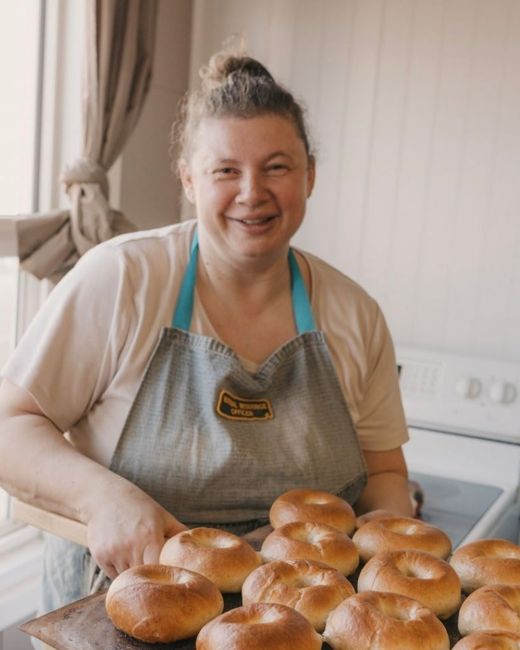
Mark Olson

Mark Olson lives on, and leads the startup Flokk from, farmland in west-central Alberta that his family has cared over for a century.
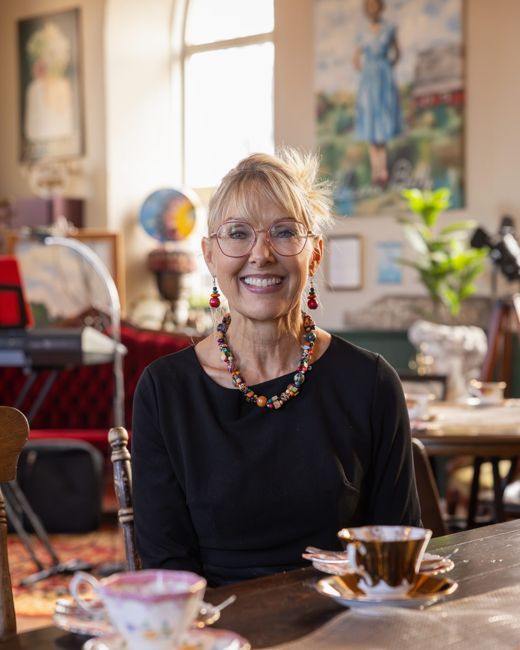
Mark brings the diverse background; hands on experience farming and ranching, 30 years in IT development and management, project management and leadership in complex and highly regulated environments, necessary provide a unique and practical approach to realizing innovation in agriculture.

Flokk Systems is an Alberta AgTech startup founded by four Alberta ranching families working to bring to market a solution which digitizes, with unprecedented affordability and ease of use, traceability, sustainability, and productivity for cow/calf ranches.

Mark's passions are advocating for Canada's generational opportunity as the global price setting food exporter, and securing for rural Canadians the opportunity to define and create solutions which solve the problems of, and realize for rural Canadians the prosperity that come from solving the problems of, rural Canadians.

https://www.linkedin.com/in/olsonmn/

https://flokk.ca

Jeremy Ratzlaff

Jeremy Ratzlaff is a cinematographer and producer from Treaty 4 territory in Moose Jaw, Saskatchewan. He is an Associate Member of the Canadian Society of Cinematographers as well as a Director of Photography with ICG 669. He has lensed shows for CBC, APTN, AMI-tv, and Paramount+, as well as award-winning feature films that have enjoyed theatrical, festival, and streaming distribution. He is an earnest advocate for Saskatchewan's independent film community.

Professional Website: https://www.jeremyratzlaff.com/

Jaigris Hodson

Jaigris Hodson

Jaigris Hodson is the Canada Research Chair in Digital Misinformation, Polarization, and Anti-Social Media. Their research takes an interdisciplinary approach to understanding how the technologies we use to communicate heighten our vulnerabilities to misinformation, polarization, and other on- and offline anti-social behaviors.

Hodson uses novel, field-building approaches to map the relationships between polarization, misinformation, and online harassment, and to facilitate democratic communication.

Experience As a Canadian Science Policy Fellow (2018-2019), Jaigris worked with Environment and Climate Change Canada to assist in understanding how to best communicate the science of climate change to the Canadian public. Jaigris is on the editorial board for the Journal of Digital and Social Media Marketing.

Jaigris has also worked as a social media consultant with the private sector for such organizations as the Canadian Country Music Association and GCI Canada, and is a sought-after speaker on topics such as digital or social media communication, diversity, and technological disruption.

Profile: https://www.royalroads.ca/people/jaigris-hodson

Margot Cathcart

Margot Cathcart

Margot Cathcart Chief Executive Officer Rural Manitoba Economic Development Corporation (RMED)

Margot Cathcart grew up in rural Manitoba, graduated from Brandon University, and after living in Japan and Winnipeg, returned to Brandon with her husband to raise their two sons. Describing herself as a “builder,” she has been involved from the ground up in product, business, and industry development.

Her private sector experiences span television, news media, information management, technology, agriculture, food, and financial services. Over the course of her career, she has held numerous private sector management roles. Prior to joining RMED, she held senior management positions with Manitoba Agriculture and Resource Development, developing province-wide economic development programming and re-engineering operations to enhance knowledge management and operational efficiencies. In addition to her public and private sector experiences, Margot is a Certified Executive Coach and Working Genius Facilitator.

LinkedIn Profile: https://www.linkedin.com/in/margot-cathcart-83a407/

Zita Cobb

Zita Cobb

Zita Cobb is a Canadian business leader and social entrepreneur who helped transformed her birthplace into a model for community-driven economic development. Born on Fogo Island, Newfoundland and Labrador in 1958, her family was forced to leave when the cod fishery collapsed. After studying business in Ottawa, she became CFO of JDS Uniphase, a global leader in fiber optics technology.

Following her retirement in 2001, Cobb returned to Fogo Island and founded Shorefast in 2004 with her siblings, Alan and Anthony, with a mission to strengthen the community’s resilience through place-based economic development. In 2013, Shorefast opened Fogo Island Inn, now a Michelin Three Keys property and an internationally acclaimed example of regenerative tourism.

Cobb's pioneering work has earned her honorary doctorates, membership in the Order of Canada (2016), and recognition as the first social entrepreneur inducted into the Canadian Business Hall of Fame.

In December 2025, she launched the Shorefast Institute for Place Based Economies, which brings together communities, governments, and markets to develop and expand place based approaches to economic development. Learn more at: The Shorefast Institute - Shorefast

Eliza Doyle

Eliza Doyle

When Eliza Doyle’s car broke down in Nashville in 2015, she found herself happily stuck in Music City. The venerable Saskatchewan banjo player and singer/songwriter had stopped in to see a festival and ended up enjoying an extended stay, playing in bars and meeting all manner of talented musicians. Having been on sabbatical to follow her muse anyway, it seemed like fate urging her to keep on the well-worn path to musical fulfillment.

Doyle has had a twenty year career in groups, as a solo artist, as a professional session musician, playing banjo, singing, and performing with the banjo, dobro, guitar, and mandolin. She has released nine full-length albums, won a Juno with the group The Dead South (which she toured with from 2016-2018), and has toured Canada, the USA and Europe extensively. Doyle has been a regional finalist in CBC’s Searchlight Canada competition and past winner of Bell Media’s contest, The Next Big Thing.

Most recently, she’s co-founded a non-profit, C.A.M.P (Community Arts Mentorship Program) to bring music programming to remote and underserved Indigenous and Metis communities in Saskatchewan, winning her a CBC Top 40 Under 40 Award, as well as an Industry Achievement Award in 2021 and 2022, and nominations in both 2020 and 2023.

Doyle’s latest studio album, “Pretty Strange” is a 10 track collection of bangers captured live at Sidekick Studios in Nashville, TN on May 4th, 2022. Recently released March 1st 2023, it summarizes Doyle’s progression as an artist by framing her unique and catchy, melody driven songwriting style in the context of an exciting alt- country/folk sound. With driving banjo, guitar and pedal steel licks throughout to keep the listener engaged and eager to discover each track, her fresh take on the Americana genre is a welcomed addition to the scene.

More information on Eliza can be found here: https://elizamarydoyle.com/

Kyle Folk

Kyle Folk

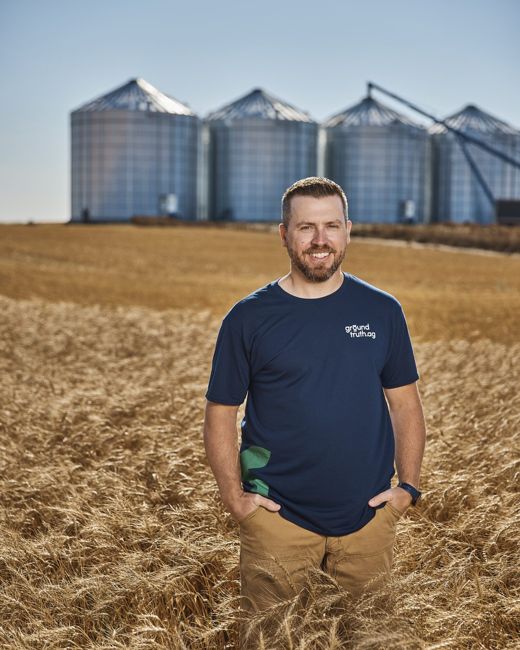
Kyle Folk – CEO - Kyle grew up grain farming with his parents on their 4000-acre farm. In 2011 he founded an AgTech company called IntraGrain Technologies Inc. Kyle started IntraGrain from nothing and grew it to be one of the largest grain storage monitoring companies in the world before it was acquired in 2018 by a Canadian public company. Now Kyle is tackling automated grain grading and quality throughout the supply chain to drive efficiency, consistency and reliability in our grain and food supply.

Kyle's LinkedIn: https://www.linkedin.com/in/kyle-folk-052a1755/

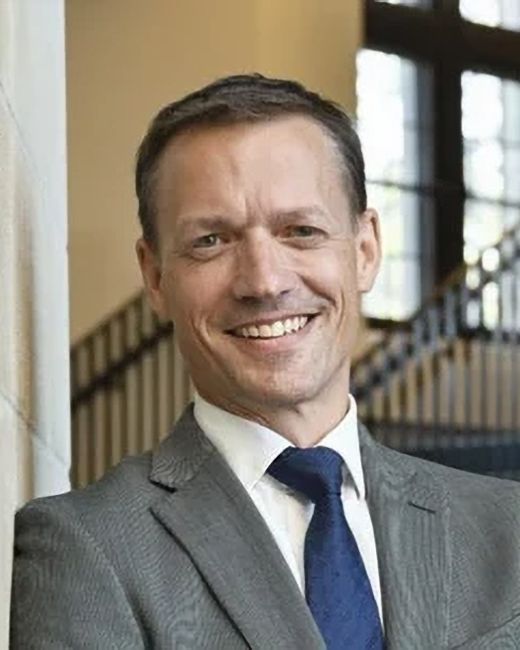
Theo Argitis

Theo Argitis

As Senior Vice President, Policy, Theo leads the Council’s policy team and provides analysis and insights on a wide range of issues related to the economy and public policy.

Theo has studied and written on global economic and political affairs for three decades. His journalism career began in the mid-1990s, where he reported on the developing economies of Eastern Europe as managing editor of current affairs weekly New Europe. He joined Bloomberg in 1999 to open a bureau in Athens, before moving to Ottawa six years later. Since 2005, Theo has written on just about every major story at the nexus of power and money in Canada.

Born in Athens and raised in Montreal, Theo graduated from McGill University in 1989 and holds a Masters degree in economics from the University of Toronto.

LinkedIn: https://www.linkedin.com/in/theophilos-argitis/

Dr. Merelda Fiddler-Potter

Dr. Merelda Fiddler-Potter

Dr. Merelda Fiddler-Potter is a Cree and Métis scholar, journalist, and Associate Professor at the First Nations University of Canada. She teaches in Indigenous Journalism & Communication Arts and Indigenous Business & Public Administration.

With nearly 20 years in media, including a career with CBC as a reporter, producer, and documentary filmmaker, she brings strong real-world storytelling into her academic work.

Her research focuses on Indigenous storytelling, media, and public policy, with an emphasis on how narratives shape public understanding, reconciliation, and policy outcomes.

She holds a PhD in Public Policy from the Johnson Shoyama Graduate School of Public Policy, along with a Master of Arts and a Bachelor of Journalism and Communications from the University of Regina. She also works as a consultant, advising organizations on Indigenous engagement, communications, and reconciliation.

More information about Dr. Merelda Fiddler-Potter can be found here: https://www.fnuniv.ca/academic/faculty/merelda-fiddler-potter/

Les Perreaux

Les Perreaux

Les Perreaux is the editor-in-chief of Policy Options, the commentary site of the Institute for Research on Public Policy.

Policy Options is a non-partisan, digital publication based in Montreal that brings together leading voices from academia, government, journalism, civil society and industry to analyze pressing public policy issues in Canada. It publishes timely, accessible commentary that connects research to real-world decisions, with a focus on practical solutions, diverse perspectives and topics ranging from the economy and environment to social policy, governance and foreign policy.

Les was raised in Bellegarde, 150 km northeast of Estevan, and studied political science at the University of Saskatchewan and journalism at the University of Regina. Prior to joining Policy Options and the IRPP in 2021, Les worked as a reporter in Quebec and on the Prairies for more than 25 years. He was the Montreal bureau chief and national correspondent for the Globe and Mail and The Canadian Press. Before that, he worked as a Prairie correspondent for the National Post based in Winnipeg and as a reporter at The Saskatoon StarPhoenix.

While Les mainly covered national and provincial politics and other news in Quebec, Manitoba and Saskatchewan, he also covered the war in Afghanistan, armed conflict in the Middle East and disasters in Haiti and Kashmir. He has received national journalism awards and nominations for team coverage of mental health issues of Canadian veterans of the war in Afghanistan, the opioid crisis and the Lac-Mégantic rail disaster.

Verona Thibault

Verona Thibault

Verona Thibault is the Chief Executive Officer of the Saskatchewan Economic Development Alliance (SEDA), where she leads provincial efforts to strengthen community and regional economic resilience across Saskatchewan. In her role, she oversees strategic initiatives that support municipalities, Indigenous communities, regional alliances, and economic development practitioners through capacity building, investment readiness, and systems‑level collaboration.

With deep experience in community economic development, Thibault is recognized as a systems convener who brings diverse partners together to address complex economic challenges. Her leadership spans major provincial initiatives, including the Saskatchewan Investment Readiness Initiative (SIRI), which is supporting multi‑region analysis, land‑readiness tools, sector mapping, and opportunity development.

LinkedIn: https://www.linkedin.com/in/saskecdevassoc/

Sarah McInnis

Sarah McInnis

Councillor - City of Humboldt

Born and raised in Saskatchewan, Sarah pursued a career in neuroscience before discovering her passion for higher education. She worked at the University of Winnipeg and later at the University of Prince Edward Island, where she co-founded Young Voters, a non-partisan organization dedicated to increasing political literacy and youth engagement. In her time on Prince Edward Island, she also founded the Out of the Blue Gala, a large fundraising gala and event in support of mental health.

While in Prince Edward Island, Sarah launched her own textile company and was recognized as one of Atlantic Canada’s 30 Under 30. She later transitioned into government work, serving in the Office of the Official Opposition at the Legislative Assembly, where she managed constituent relations, policy communications, and social media for seven elected members. During her tenure, she organized the Legislature’s first-ever rally, which led to the successful passage of an opposition bill. Most recently, she served as the Executive Director of the Humboldt & District Chamber of Commerce, before resigning to run for city council.

Sarah enjoys spending time outdoors with her husband, a power line technician, and their two young daughters. She currently serves as vice-president of Prairie Roots Early Learning Centre, a member of the Lion’s Club, and is involved with the Bill Brecht Park Upgrade Committee and the Carlton Trail Ski Club board. Sarah is passionate about transparent governance, open communication, and ensuring that everyone feels heard and represented.

Profile page: here

Alastair MacFadden

Alastair MacFadden

Alastair MacFadden, M.A., B.Sc. - Assistant Deputy Minister, Saskatchewan Region, Prairies Economic Development Canada

Alastair MacFadden is an Assistant Deputy Minister at Prairies Economic Development Canada, the federal agency that ensures businesses and workers are equipped for a durable inclusive and diversified economy. Previously, he was Director of Executive Education, interim Director of the University of Saskatchewan campus, and Executive-in-Residence at the Johnson Shoyama Graduate School (JSGS) of Public Policy. Alastair also served as Deputy Minister of Immigration and Career Training and Assistant Deputy Minister of Labour Market Development for the Government of Saskatchewan.

Alastair is a graduate of the University of Saskatchewan with degrees in biochemistry (B.Sc.), psychology (Hon. Cert) and brain and behavioural psychology (M.A.). He began his public service career in the non-profit sector working with youth and adults with disabilities and their families. His career journey shaped a lifelong commitment to using data, visuals, metaphors and stories to advance public policy.

LinkedIn: https://www.linkedin.com/in/alastairmacfadden/

Dr. Farhad Moghimehfar

Dr. Farhad Moghimehfar

Dr. Farhad Moghimehfar is the BC Regional Innovation Chair in Tourism and Sustainable Rural Development at Vancouver Island University. His work focuses on advancing rural innovation through data-driven research, tourism development, and economic diversification strategies. He holds a PhD in nature-based tourism from the University of Alberta and brings extensive expertise in research design, data analytics, and community-based planning. His work integrates data and emerging technologies to support more informed and adaptive decision-making in rural contexts. Farhad leads applied research initiatives and has worked with governments, Indigenous communities, and industry partners across Canada and internationally, translating complex data into practical strategies that strengthen rural economies and enhance community resilience.

LinkedIn Profile: https://www.linkedin.com/in/farhad-moghimehfar/

Alan Nixon

Alan Nixon

Alan Nixon is the owner, operator, and managing designer of Revelation Engineering. He has been working to bring his vision of locally based Engineering Service to SE Sask for 13 years. Utilizing his knowledge of settling theory acquired through his work in the oil field, he developed the operational theory behind the Legacy Clarification Reactor (LCR); an innovative approach to water clarification. This spirit of innovation has spurred his latest invention; a bladeless wind power device that is designed for wind speed that exceed the capacity of traditional wind turbines.

LinkedIn profile: https://www.linkedin.com/in/alan-nixon-asct-16b21133/

Sarah Sinclair

Sarah Sinclair

Passionate about empowering rural communities, organizations, and companies to transform their visionary ideas into tangible outcomes. With a background in strategic marketing and community economic development, I specialize in creating tailored growth strategies that drive results and foster sustainable development.

Over the years, I have successfully collaborated with diverse organizations, helping them navigate the complexities of market dynamics while effectively engaging stakeholders. By utilizing innovative marketing techniques and leveraging community resources, I have facilitated initiatives that not only boost profitability but also enhance community well-being.

I believe that every great idea deserves the opportunity to thrive. Let’s connect and explore how we can work together to turn your big ideas into reality!

LinkedIn Profile: https://www.linkedin.com/in/sarahjsinclair/

Stephanie Ortynsky

Stephanie Ortynsky

Stephanie Ortynsky is an Associate Researcher with the Saskatchewan Urban Municipalities Association (SUMA) and a Postdoctoral Fellow at the Johnson Shoyama Graduate School of Public Policy at the University of Regina, where she also completed her PhD in Public Policy (University of Saskatchewan).

She previously was the Richard M. Bird Post‑Doctoral Fellow at the Institute of Municipal Finance and Governance (IMFG) at the University of Toronto, where she taught municipal finance in the Master of Urban Innovation program. At JSGS, she is teaching and has taught courses in social economy foundations, public sector financial management, statistics for public managers, COVID‑19 and public policy, and public policy analysis.

Her research focuses on municipal governance, public finance, wellbeing budgeting, and local policy capacity, informed by interdisciplinary work and applied projects in Saskatchewan, Switzerland, South Africa, and Tajikistan.

She also serves as an elected City Councillor in her hometown of Yorkton, Saskatchewan. Beyond her academic and municipal roles, she is committed to community wellbeing, currently teaching fitness and yin yoga with the City of Yorkton. She enjoys daily runs or hikes with her 10‑year‑old Weimaraner, Poet Pickles, maintains a steady meditation practice, and participates enthusiastically in Yorkton’s fun fitness community.

LinkedIn Profile: https://www.linkedin.com/in/ortynskystephanie/

Gordon More

Gordon More

Gordon More is the Executive Director of the Southeast Techhub (SETH), Canada’s only truly rural tech incubator focused on energy innovation, startup incubation, and economic development. He is also Past-President and Director of IDS Internet Dispatch Services Ltd., a company he co-founded and grew from a small North Vancouver office into an international logistics software provider with operations in Canada, the US and Australia.

After moving to Estevan, Saskatchewan, Gordon came out of early retirement to lead SETH, where he is building an innovation ecosystem around clean energy, critical minerals, and advanced technology. He helped to spearheaded the Innovation Centre for Energy Development (ICED) in partnership with Southeast College and the University of Regina, establishing a platform for applied research, commercialization, and investment attraction in areas such as hydrogen, small modular reactors (SMRs), coal-to-graphite, and battery supply chains.

In 2024, Gordon completed the MIT Technology and Innovation Acceleration Program, and today he applies those insights to help build rural innovation ecosystems that strengthen communities, economies, and Canada’s position in the global energy transition. He is also pursuing a Master of Arts in Interdisciplinary Studies at Royal Roads University, where his thesis explores rural innovation ecosystems and their role in national energy transitions.

His current work extends to nuclear technology, artificial intelligence, quantum computing, and data centre strategy—exploring how nuclear energy can power the AI platform shift, how quantum chips could drastically reduce that power demand, and how rural Canada can benefit economically while building new, innovative ecosystems.

A passionate advocate for rural resilience and innovation, Gordon continues to show how Southeast Saskatchewan, and rural Canada can lead globally in clean energy, technology, and entrepreneurship.

Linkedin: https://www.linkedin.com/in/gordon-more-29745b6/


Tania Hlohovsky-Andrist

Tania Hlohovsky-Andrist

Tania J. Hlohovsky Andrist is the inaugural Executive Director of the Centre for Sustainable Innovation at Southeast College, where she leads applied research and partnership initiatives focused on rural innovation, workforce development, and community economic development.

Her career spans journalism, strategic communications, and non-profit sector program development, with a strong emphasis on collaboration, systems thinking, and bridging the digital divide in rural and regional communities. She holds a Bachelor of Journalism and a Bachelor of Arts in Political Science from the University of Regina, as well as a Certificate in Innovation and Non-Profit Leadership from Luther College at the University of Regina. She is currently completing a Master of Business Administration in Community Economic Development at Cape Breton University.

LinkedIn: https://www.linkedin.com/in/tania-hlohovsky-andrist-50a29b275/

Ryan Gustafson

Ryan Gustafson

Ryan Gustafson is a course designer, instructor, and researcher at Southeast College, where he focuses on computer training, technology, and real-world project-based learning. He is currently pursuing a Master of Science in Information Systems.

Ryan’s professional experience spans various roles, including data engineering, research assistance, project management, and geology, providing him with a broad skill set in both technical and educational domains. He is committed to advancing education and applied research, partnering with local businesses and organizations to solve real-world challenges.

Ryan will be presenting his work with Tania on creating a new Applied Research program for Computer Science. Together with their students, they will unveil their Robot and AI project.

LinkedIn: https://www.linkedin.com/in/jerry-ryan-gustafson-71741320a/

Christian Boyle

Christian Boyle

Founder & CEO of Shapeshift Developments - Christian has been working as an Economic Development practitioner for nearly 20 years. His focus is on implementation and activation of regional scale projects that connect multiple sectors within the Saskatchewan economy. Christian has been active in the tourism, culture, mining and energy sectors and has focused extensively on projects that benefit Indigenous economic development initiatives in both his professional career and his volunteer duties as Board Director for the Sask Indigenous Economic Development Network and the Flying Dust First Nation Holding Corp. Through Shapeshift Christian provides tailored project development services including funding strategies, investment attraction narratives and capital readiness scenarios. Throughout his career Christian has secured over $35,000,000 in funding on behalf of his clients. Christian will be our MC for the event.

LinkedIn: https://www.linkedin.com/in/christian-boyle-b43496134/

Schedule

The 2026 program

Sunday May 24, 2026

2:30 pm
Bus from Regina airport to Estevan
6:30 PM to 9:00 PM
Delegate Social - Start Networking Early. Location: Southeast Tech Hub office

Monday May 25, 2026

8 AM
Registration Open - Coffee, Tea and morning snacks
8:45 AM to 8:50 AM
Morning Welcome
8:50 AM to 9:05 AM
Welcome and Prayer
9:05 AM to 9:20 AM
Provincial Welcome - The Frontier Hall - Minister Lori Carr Minister of Mental Health and Addictions, Seniors and Rural and Remote Health - MLA for Estevan-Big Muddy
9:20 AM to 9:35 AM
Federal Welcome - The Frontier Hall - Alastair MacFadden, M.A., B.Sc. – Assistant Deputy Minister, Saskatchewan Region, Prairies Economic Development Canada
9:35 AM to 10:20 AM
Rural Innovation. Why we are here - The Frontier Hall - Gordon More
10:20 AM to 11:00 AM
Rachel Samson plenary presentation - The Frontier Hall - Community Transformations in a Changing World Rachel Samson
11:00 AM to 11:15 AM
Break and Networking
11:15 AM to 12:15 PM
Breakout sessions
The Grid Room: Misinformation, Polarization, and Anti-Social MediaThe Table Room: Fixing Canada’s Broken AgTech Innovation SystemThe Workshop Room: Beading and Tech
12:15 PM to 1:15 PM
Lunch and Afternoon Announcements
1:15 PM to 2:15 PM
Breakout sessions
The Grid Room: Supporting Communities and Workers Through ChangeThe Table Room: Cultural Asset MappingThe Workshop Room: From Wood Stoves to WiFiThe Frontier Hall: Rural Innovation from Oil to Wind
2:15 PM to 2:30 PM
Break and Networking
2:30 PM to 3:30 PM
Breakout sessions
The Grid Room: From Trails to Data InfrastructureThe Table Room: Social Enterprise as a Vehicle for Rural InnovationThe Workshop Room: Beyond the Craftsmanship: Online Ordering and AI marketing in an Artisan BakeryThe Frontier Hall: Investing in Resilience: Community Wellbeing as Economic Infrastructure
3:30 PM to 6:00 PM
Back to your hotel to prepare for the big evening event
6:00 PM to 6:30 PM
Cocktails
6:30 PM to 7:30 PM
Dinner
7:30 PM to 8:30 PM
Presentation by Zita Cobb - Shorefast and Fogo Island
8:30 PM to 10:00 PM
An evening of music by Eliza Doyle

Tuesday May 26, 2026

8 AM
Registration Open - Coffee, Tea and morning snacks
8:50 AM to 9:00 AM
Morning Welcome
9:00 AM to 9:30 AM
Keynote - The Frontier Hall - Theo Argitis - Rural Canada & First Nations: The Backbone of Canada’s Economic Sovereignty
9:30AM to 9:45 AM
Break and Networking
9:45 AM to 10:45 AM
Breakout sessions
The Grid Room: Building a Rural Tech HubThe Table Room: Drayton Valley’s TAB ProgramThe Workshop Room: Remote Art and Marketing
10:45 AM to 11:00 AM
Break and Networking
11:00 AM to 12:00 PM
Breakout sessions
The Grid Room: Understanding Barriers and Opportunities in Trade DiversificationThe Table Room: From Classroom to Community: Real-World Innovation in Rural SKThe Workshop Room: AI-Powered Grain Grading
12:00 PM to 1:00 PM
Lunch and Afternoon Announcements
1:00 PM to 2:00 PM
The Frontier Hall - Fireside Chat with Dr. Merelda Fiddler-Potter and Les Perreaux: How Rural and Indigenous Perspectives Reach Decision-Makers
2:00 PM to 2:15 PM
Break and Networking
2:15 PM to 3:15 PM
Breakout sessions
The Grid Room: Lights, Camera, Saskatchewan!The Table Room: From Data to Development: Mapping Rural OpportunityThe Workshop Room: The Rural Art Studio as an Innovation Lab
3:15 PM to 3:45 PM
Gordon More - The Frontier Hall - Closing Remarks. What’s Next?
3:45 PM to 5:00 PM
Last Chance Networking
5:00 PM
Bus to Regina Airport and Regina Hotels

Thank you to our 2026 sponsors

SaskPower
SaskTel
Innovation Saskatchewan
PrairiesCan
University of Regina
Southeast College Centre of Sustainable Innovation
IRPP
SEDA
City of Estevan
Co-operatives First
AiSK
RMED
Bear Claw Casino & Hotel
Sector 1 Management
Travelodge
Estevan Suites